Press Releases
Press Statement on the IDSB–TGTV Syria Visit
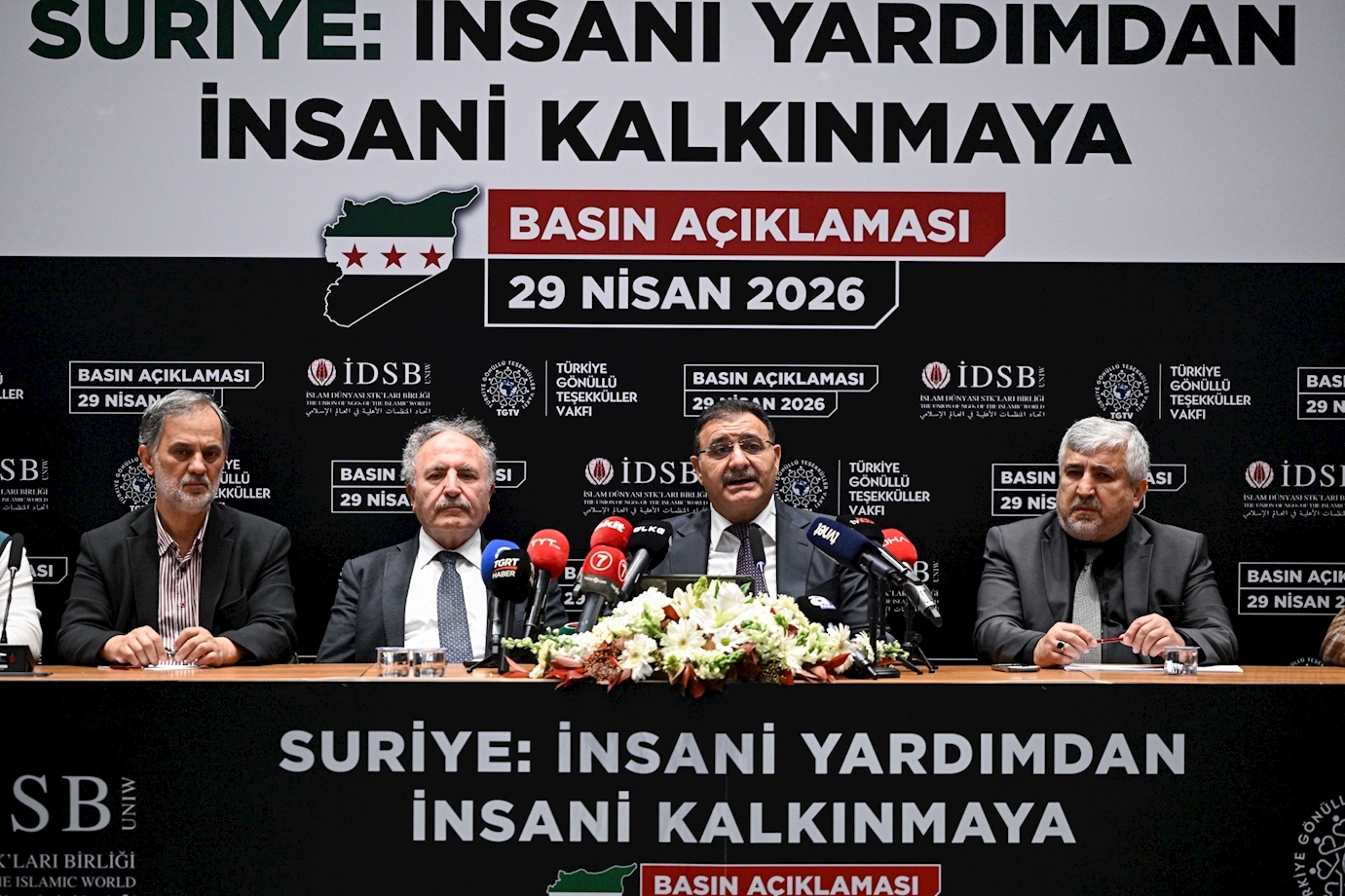
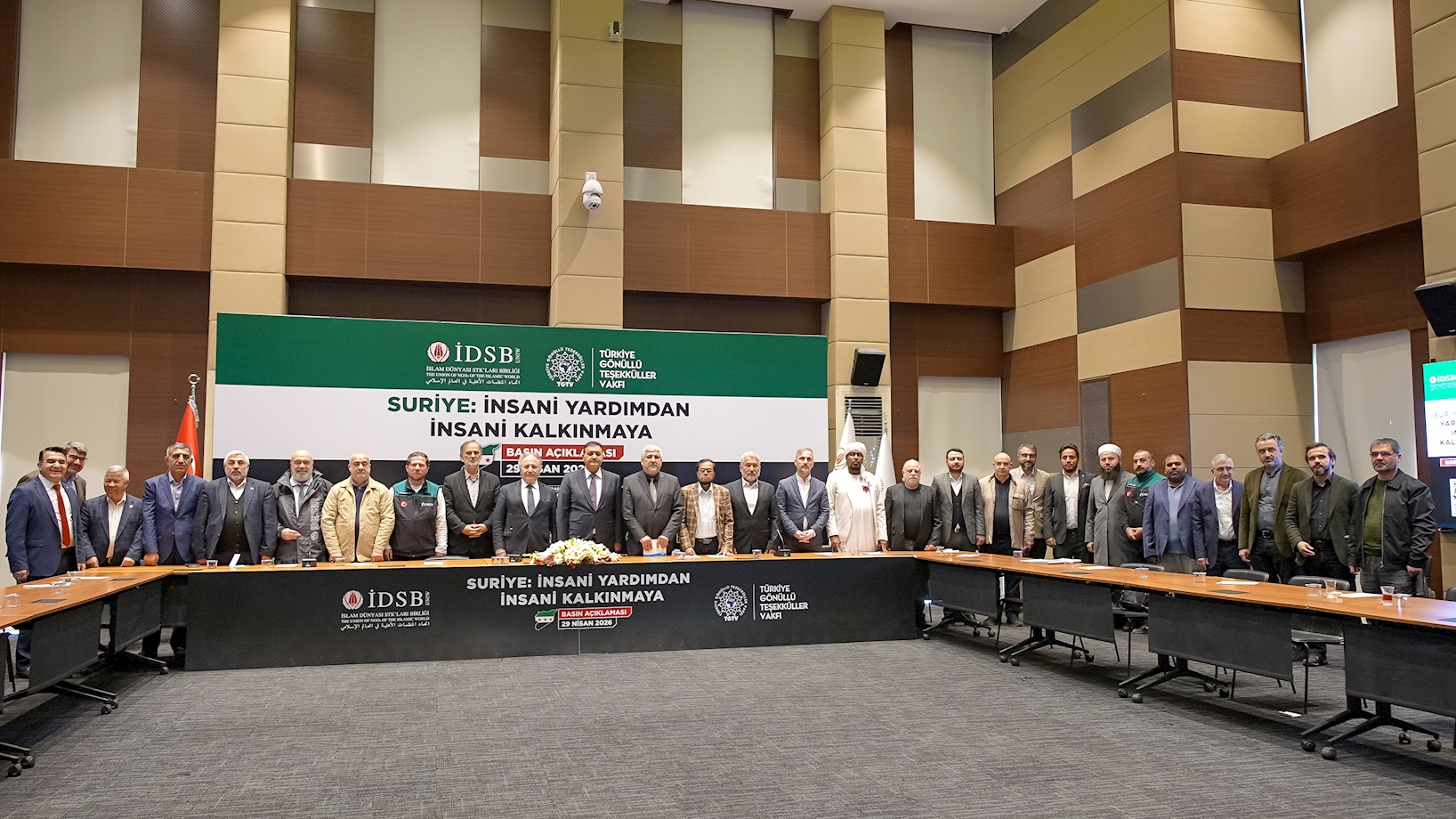
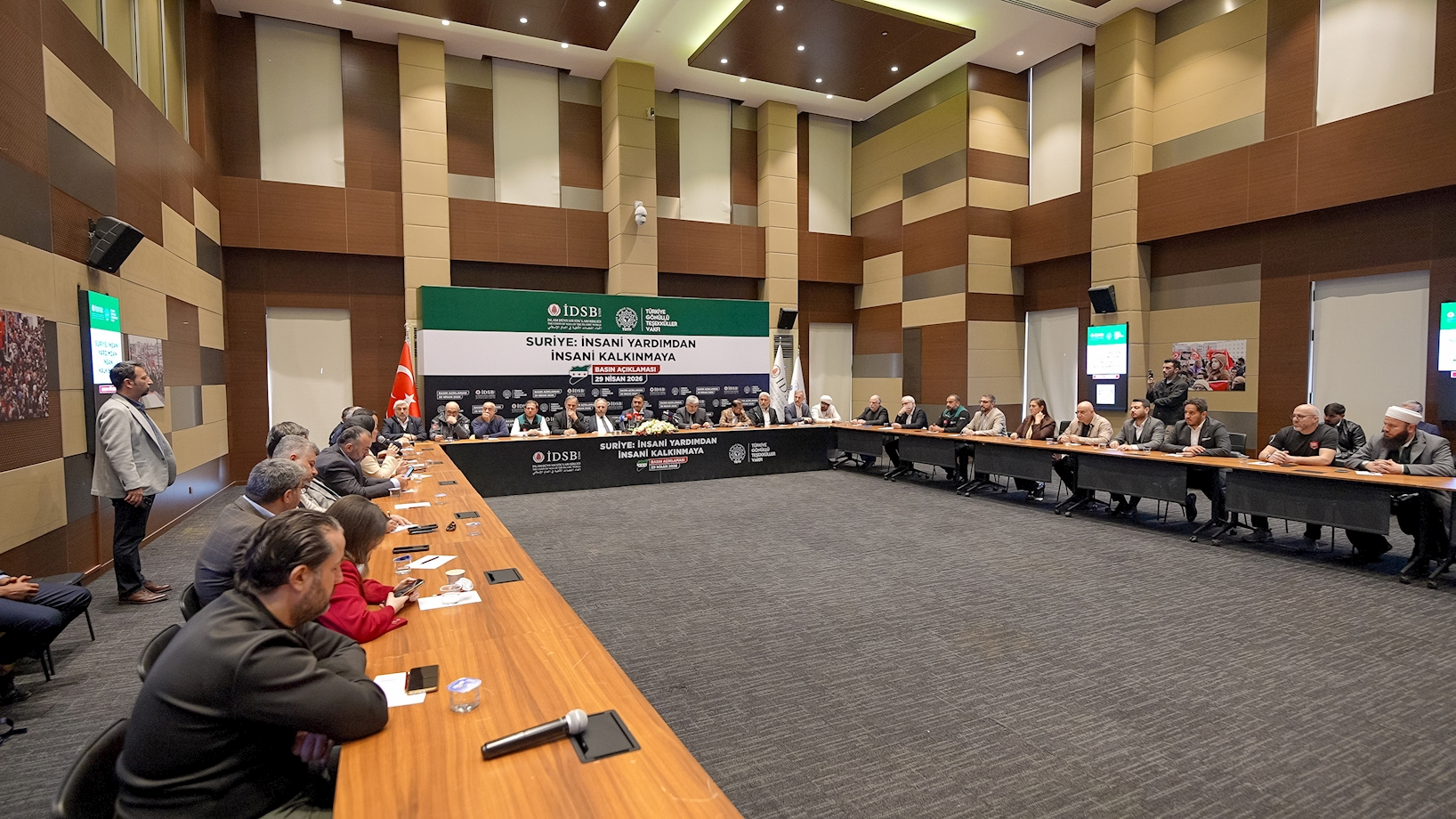
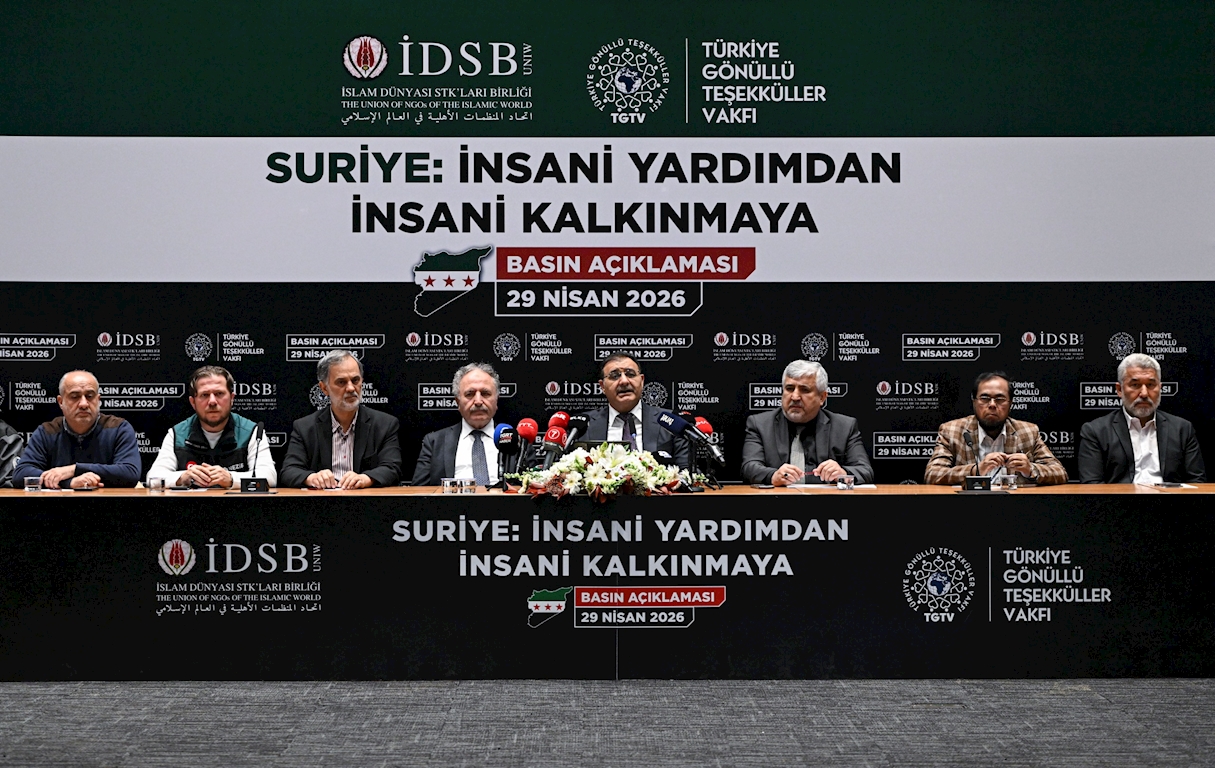
The press statement titled “Syria: From Humanitarian Aid to Humanitarian Development,” organized in cooperation between the Union of NGOs of the Islamic World (IDSB) and the Foundation for Volunteer Organizations of Türkiye (TGTV) and held at the TÜGVA Headquarters, was shared with members of the press and the public with the participation of 20 civil society organizations included in the Syria delegation.
The remarks of IDSB Secretary General Mr. Eyüp Akbal on the matter are as follows:
Distinguished members of the press,
Esteemed guests,
Valued participants,
Today, as a delegation of the Union of NGOs of the Islamic World and the Foundation for Volunteer Organizations of Türkiye, we are here to share with the public our observations, evaluations, and perspectives for the upcoming period regarding our visit to Syria.
Together with a delegation composed of IDSB member NGOs and TGTV representatives, we conducted field visits between April 13–16, covering primarily Damascus, as well as Aleppo, Homs, and Daraa.
And we have seen that Syria today is:
- A country striving to emerge from severe destruction and a humanitarian crisis,
- Standing at the threshold of reconstruction and development,
- Yet experiencing a fragile transition process due to challenges in infrastructure, employment, and security.
Before going into the details of our visit, I would like to emphasize the following:
The relationship between Türkiye and Syria is not merely a relationship between two neighboring countries. This relationship is rooted in deep historical, cultural, humanitarian, and social ties.
We are speaking of two peoples who share the memory of the same geography, are nourished by the same civilizational climate, and whose joys and sorrows are intertwined.
Therefore, when we look at Syria, we do not see the issue merely as a political or diplomatic matter, but as a part of our shared faith, history, conscience, and responsibility.
During our field engagements, we also observed that this emphasis on brotherhood, shared history, and the waqf (endowment) civilization was strongly expressed by our counterparts.
The primary objectives of our visit were:
- To observe the situation on the ground firsthand,
- To listen directly to the needs from relevant stakeholders,
- To engage with public institutions and local actors,
- And to evaluate the future role of civil society on a more solid basis.
Within this scope, our delegation met with:
- The Syrian Minister of Labor and Social Affairs,
- The Syrian Minister of Emergency and Disaster Management,
- The Syrian Minister of Awqaf,
- Relevant ministry officials,
- The Directorate General for International NGOs and Meetings of the Ministry of Foreign Affairs,
- Officials from the Syrian Development Fund,
- The Daraa Governorship,
- The Mufti’s Office of Homs,
- Our Consulate General in Aleppo,
- Our Ambassador in Damascus,
- And various field institutions.
We also had the opportunity to conduct field observations across Aleppo, Damascus, Daraa, and Homs.
This visit clearly demonstrated once again that:
The issue in Syria is not only the physical destruction caused by war. There is also multilayered damage in infrastructure, education, healthcare, employment, social balance, and institutional functioning.
The common picture that emerged from the places we visited and the institutions we engaged with is this:
A significant portion of the population is still struggling to survive under extremely difficult conditions.
- Housing problems persist.
- Educational infrastructure has suffered severe damage.
- Access to healthcare is extremely limited in many regions.
- Water, sanitation, roads, communication, and basic public services face serious deficiencies.
In some areas, people cannot return to their homes not only because of destroyed houses but also due to the absence of schools, non-functioning hospitals, lack of water, unemployment, and insufficient security.
Presentations made by the Syrian side to our delegation also clearly identified the main obstacles to return as:
- Destroyed housing,
- Lack of basic services,
- Unemployment,
- Security weaknesses,
- And coordination problems.
On the other hand, the Syrian side has set the closure of tent cities and enabling people to return to their hometowns as a strategic goal.
However, it is clearly stated that achieving this requires not only housing but also infrastructure, employment opportunities, social trust, and coordination.
At this point, one of the most important outcomes of our visit is this:
It is no longer sufficient to talk only about humanitarian aid in Syria.
Of course, humanitarian aid remains important.
Meeting urgent needs is still vital.
However, at this stage, the issue is transitioning from aid to sustainable development.
In other words, the matter is no longer just about delivering food, providing temporary shelter, or responding to emergencies.
The real issue is:
- Enabling people to stand on their own feet in their own cities,
- Supporting youth in gaining professions,
- Empowering women to participate more actively in production and social life,
- Ensuring children return to education,
- And strengthening the local social fabric.
We observed that our counterparts, especially the Syrian Ministry of Labor and Social Affairs, also emphasized the approach of “transitioning from humanitarian aid to humanitarian development.”
Particular emphasis was placed on:
- Vocational training,
- Volunteerism culture,
- Youth support,
- Women’s empowerment,
- And cultural efforts contributing to social peace.
The key conclusion we drew from the field is:
For lasting and genuine recovery, four main pillars are decisive:
- Housing and infrastructure,
- Employment,
- Security,
- And inter-institutional coordination.
People can only return permanently and rebuild their lives if they have a secure environment where they can send their children to school, access healthcare, and sustain their livelihoods.
Distinguished members of the press,
Allow me to highlight some key points:
- Currently, more than 1 million people in Syria live in tents and temporary shelters.
- There are over 170 official and more than 1,000 informal camps.
It was stated that by 2027, there is a goal to gradually close tent cities and enable approximately 1.2 million people to return to their hometowns.
However, considering conditions on the ground, this goal poses serious challenges.
As previously mentioned, destroyed housing, inadequate infrastructure, unemployment, and security issues remain major obstacles.
Revitalizing economic life requires strengthening:
- Investment,
- Production,
- And vocational training.
In this context, Syria is no longer only a country receiving aid but is seeking to become a country that attracts investment.
At the same time, efforts are being made to preserve the multi-religious and multi-ethnic social structure, although social peace remains fragile.
We were informed that approximately 2 million children have been deprived of education due to the war, and around 7,000 schools across the country require urgent restoration.
In Daraa alone, 120 out of 960 schools have been completely destroyed—highlighting the severity of the situation.
As the IDSB delegation, we emphasize that we do not approach this process solely from a physical reconstruction perspective.
We have presented a comprehensive vision including:
- Transferring successful education models from Türkiye,
- Developing academic cooperation between universities,
- And building next-generation educational complexes.
Our aim is not only to rebuild schools but also to establish a sustainable and high-quality education ecosystem that offers hope for future generations.
Another critical issue is the severe damage to places of worship and cultural heritage, which carry the memory and identity of society.
- Approximately 1,500 mosques have been destroyed,
- In some cities, up to 60% of mosques have been damaged.
We believe Türkiye has a unique contribution capacity in this process.
In recent years, Türkiye has accumulated significant experience in:
- Disaster management,
- Healthcare transformation,
- Urban development,
- Waqf systems,
- Civil society coordination,
- Education,
- And reconstruction.
Especially its post-February 6 earthquake recovery experience offers valuable reference for the region.
We do not see this as superiority, but as a responsibility grounded in brotherhood and shared experience.
We believe Türkiye’s public institutions, universities, expert networks, and civil society can provide constructive contributions to Syria’s recovery.
Indeed, we observed strong interest and willingness for cooperation regarding Türkiye’s experience.
For Syria to stand strong again:
- Humanitarian aid must evolve into sustainable development,
- Infrastructure must be rebuilt,
- Investments creating employment must be implemented,
- And security must be permanently established.
Humanitarian aid is valuable, but lasting solutions lie in production, employment, and a strong social structure.
The total volume of reconstruction projects prepared by NGOs in our delegation amounts to 154 million USD.
Some organizations presented 10-year visions, while others shared their 2026 plans.
Distinguished members of the press,
To enhance the effectiveness of NGOs:
- Bureaucratic processes must be simplified,
- Procedures for opening offices, money transfers, customs, and permits must be clarified,
- And regular communication channels must be established.
In our discussions, there was a positive willingness to:
- Establish joint commissions,
- Operate regular consultation mechanisms,
- And address issues periodically.
We believe this will improve efficiency on the ground.
As IDSB, our approach is clear:
We view this process not only in terms of today’s needs but also the construction of tomorrow.
Our role is to:
- Listen carefully to the field,
- Accurately identify needs,
- Evaluate the capacity of our member organizations collectively,
- And strengthen sustainable contribution pathways.
With its wide network, international experience, and long-standing field presence, IDSB will continue to provide a constructive, coordinated, and long-term approach.
We were pleased to see that this institutional capacity was recognized by our counterparts.
Let me underline this clearly:
Syria carries deep wounds today.
Our responsibility is to support the will for recovery and strengthen brotherhood not only in words but through cooperation and lasting contributions.
Our hope is that Syria will no longer be known only for crises, but will regain stability, education, production, cultural vitality, and social peace.
We believe that civil society in Türkiye will continue to follow this process responsibly and with a long-term perspective.
Finally, I would like to thank all institutions that hosted us during our visit and all stakeholders who sincerely shared their views and assessments.
Thank you for your participation in this press conference.
Respectfully.
Photo Gallery