Press Releases
The Dimensions of the Humanitarian Crisis in Lebanon and a Call for Civil Society Coordination
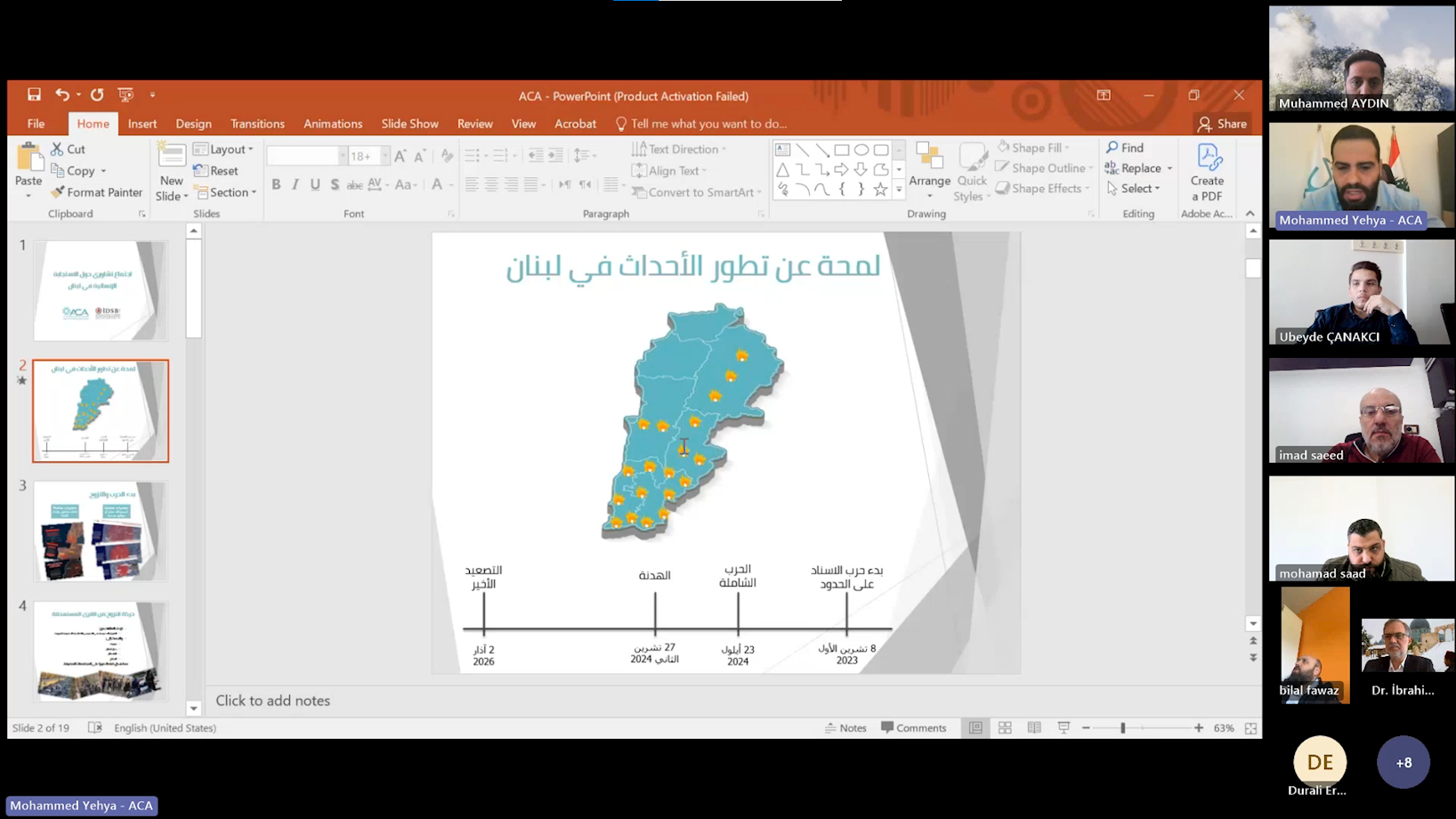
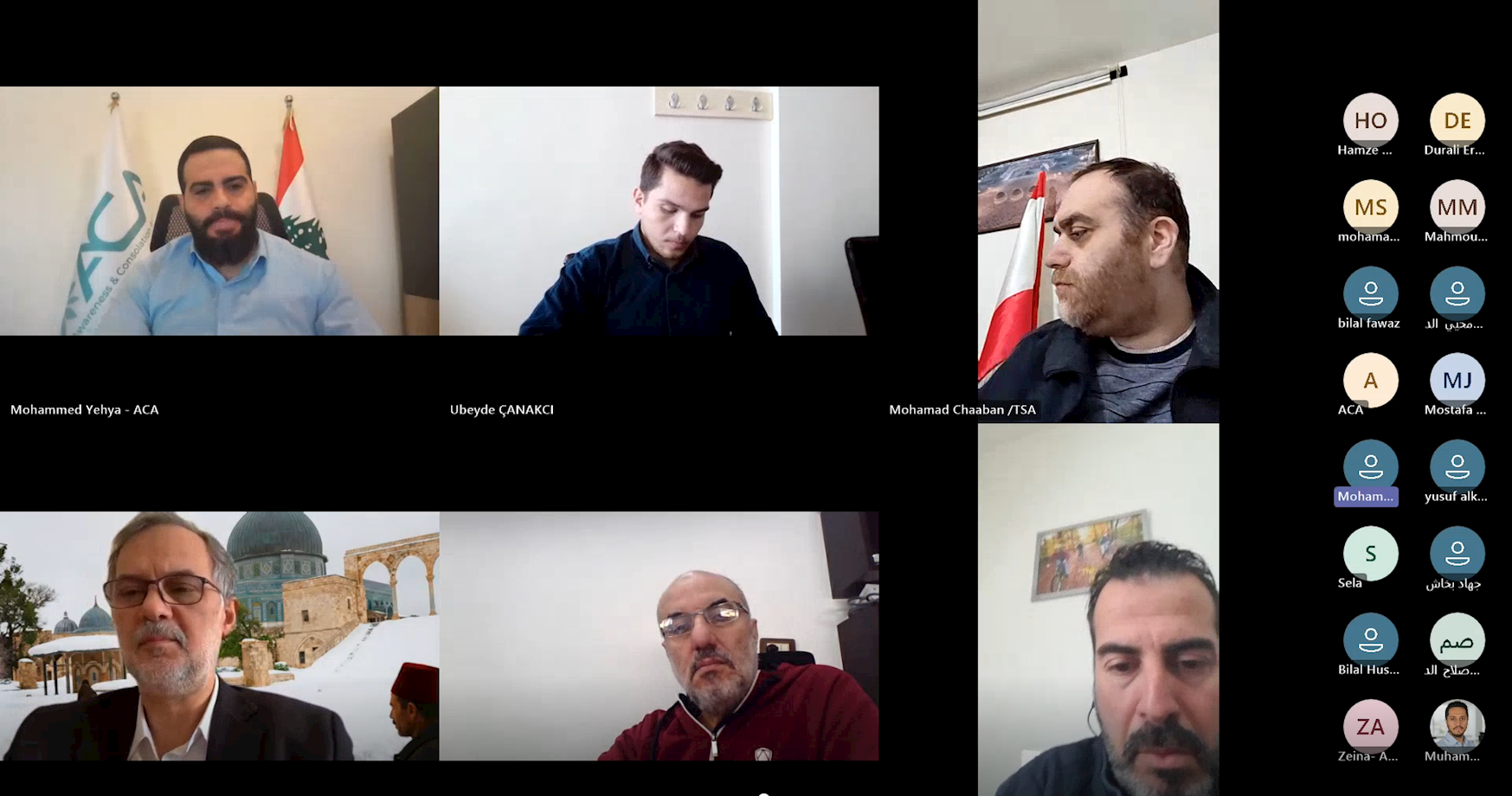
In an online meeting chaired by Eyüp Akbal, Secretary General of the Union of NGOs of the Islamic World (İDSB), member civil society organizations operating in Lebanon came together to comprehensively assess the increasingly deepening humanitarian crisis in the region. During the meeting, up-to-date data from the field were shared, and discussions focused on crisis management, its social consequences, and urgent response strategies.
Scale of the Crisis and Demographic Impacts
According to official reports conveyed from the field:
-
The area south of the Litani River has been completely evacuated, which constitutes 20% of Lebanon’s total land area.
-
In just the past week, 570 civilians lost their lives and 450 were injured as a result of 1,295 military interventions.
-
Of the approximately 750,000 displaced civilians registered across the country, only 20% have been accommodated in schools and similar official shelters.
-
The remaining 80% have been forced to share apartments under sharply rising rents, seek refuge in abandoned buildings, or live on the streets with extremely limited means.
Status of International Funding and Call for Cooperation
One of the most critical issues emphasized during the meeting was the decline in international aid. According to the information shared:
-
With the argument that the effects of the Syrian crisis have decreased, the funds allocated to Lebanon by the United Nations and other international organizations have fallen to around 7% compared to previous years.
-
Additionally, institutional aid from European and Gulf countries has largely stopped or been restricted due to political regulations and regional dynamics.
Participants strongly emphasized that in the face of this emerging gap in international support, the initiative to be taken by Turkey-based civil society organizations, official aid institutions, and government authorities in the region would be critically important for ensuring sustainable humanitarian assistance.
Sectoral Needs Assessment
Urgent and sustainable needs in the region were categorized sectorally by participating institutions as follows:
Shelter and Energy Infrastructure:
Considering winter conditions and infrastructure deficiencies, heaters and blankets for high-altitude areas are a priority need. Due to frequent power outages, there is also an urgent requirement for micro-photovoltaic solar panel systems to support lighting and communication needs.
Food and Nutrition Security:
For temporary shelters and houses without kitchen infrastructure, ready-to-consume food packages (such as canned goods) and regular hot meal distribution have become operational necessities rather than standard food parcels.
Public Health and Hygiene:
To prevent possible disease outbreaks caused by overcrowded shelters, it is vital to deploy mobile health clinics, ensure the supply of medication for chronic patients, and provide medical hygiene kits for women, children, and the elderly.
Education:
The use of schools as shelters has significantly disrupted educational activities. Ensuring continuity of education requires providing alternative shelter solutions for displaced populations or implementing remote education mechanisms.
Vulnerable Groups and Environmental Risks:
It is essential to establish accessible spaces for individuals with physical disabilities and supply medical equipment such as wheelchairs and walkers.
Furthermore, more than 80,000 Palestinian refugees who lost their jobs and livelihoods in southern Lebanon require ambulance fuel and medical supply support to maintain healthcare services.
There are also warnings of a serious environmental and public health crisis due to the overcapacity of waste management systems, while technological infrastructure support is needed to protect the right to education disrupted by the use of schools as shelters.
Protection:
Provision of psychosocial and spiritual counseling services for families and the establishment of child-friendly play areas are also among the urgent needs.
Future Steps and the Way Forward
As a result of the consultation meeting held under the coordination of the Union of NGOs of the Islamic World (İDSB), it was decided to consolidate all current field data, statistics, and institution-based needs assessments into a comprehensive joint situation report in both English and Turkish.
İDSB Secretary General Eyüp Akbal also announced that a field visit to Lebanon will be conducted after the Eid al-Fitr holiday in order to observe civil society activities on site, expand consultations with member organizations, and directly assess the needs.
We respectfully present this information to the public, decision-making authorities, and esteemed members of the press.
Photo Gallery